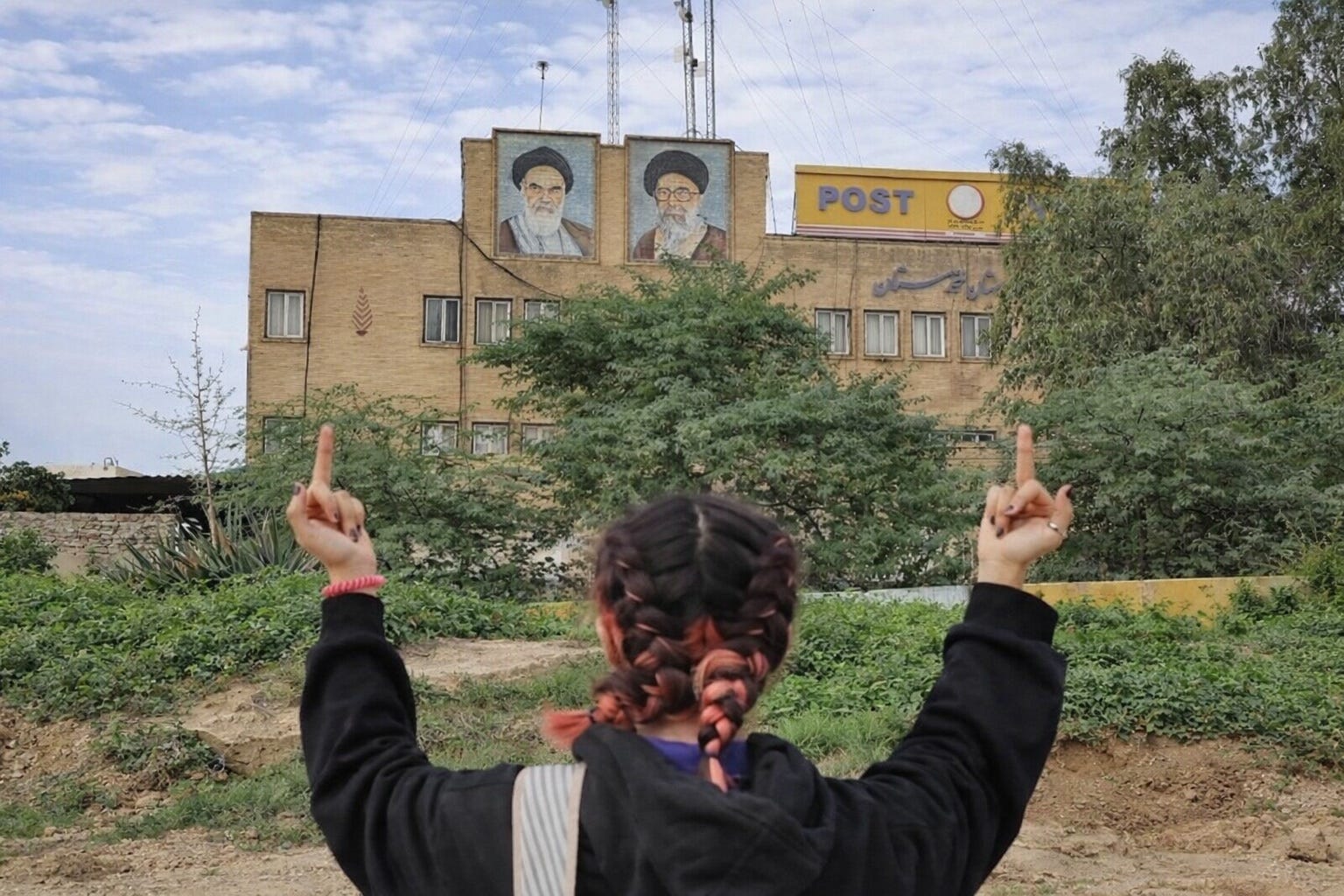
Iran and the selective outrage of the West
The refusal to condemn a murderous theocracy reveals the hypocrisy of activists.
If our principles are inconsistent they cannot be said to exist at all. This is a lesson yet to be learned by those activists who have endlessly marched against the tragic loss of civilian life in foreign conflicts but are curiously silent on the oppression of the people of Iran. Since the protests against the Islamic theocracy flared up a few days ago, coverage of the events in the Western media has been surprisingly limited. Many of the most vociferous campaigners for human rights have said nothing at all, in spite of the fact that the regime has murdered a number of the protesters.
In order to solve this mystery, one could do worse than refresh our memories about a pro-Palestine march that took place on the streets of London in June, soon after the US strikes on Iran’s nuclear facilities. Protesters were seen openly endorsing the oppressive Iranian regime in the name of ‘justice’ and ‘freedom’. There was even one banner with a photograph of the Ayatollah Ali Khamenei and the slogan ‘Choose the right side of history’.
Let’s remind ourselves what ‘the right side of history’ looks like. Iran has one of the highest global execution rates in the world, consistently ranking second only to China. Last year there were at least 1500 verified executions, a thirty-five-year high. Those targeted often include political dissidents as well as ethnic minorities such as Kurds and Baluchis, often without due process. The actual figures are almost certainly higher due to the clandestine operations of the regime. For verification of all these details and more, you can read Amnesty International’s latest review of the country’s human rights abuses.
There is no freedom of speech in Iran. Any criticism of the regime is outlawed, the internet is strictly monitored, and journalists are often subject to harassment and persecution. The state maintains a paramilitary ‘morality police’ known as Gasht-e Ershad, which routinely assaults and arrests women for perceived ‘immodesty’ (such as improper hijab wearing). The last major protests in Iran took place after the ‘morality police’ murdered 22-year-old Mahsa Amini, and over 500 people were killed in the violent crackdown that ensued.
So now that the people appear to be rising up, why aren’t those who are committed to human rights out on the streets condemning the regime? Why did it take the BBC so long to cover the protests at all? Veteran BBC reporter John Simpson attempted an answer. ‘Very difficult for news organisations to get correspondents in’, he wrote on X. ‘The BBC is banned, and so are most others. It’s a bit like Gaza.’
It didn’t take long for other users of the platform to point out the obvious flaw in his logic. The BBC has covered Gaza endlessly, and has repeatedly been accused of regurgitating Hamas propaganda. Its documentary Gaza: How To Survive a Warzone was narrated by the son of a Hamas minister, with subtitles mistranslated so that Palestinians’ references to ‘the Jews’ became ‘Israelis’ and all mentions of ‘jihad’ were omitted altogether. When one contributor mentioned a ‘jihad against the Jews’, the BBC silently amended this to a fight against ‘Israeli forces’.
In this age of tribalism, consistent principles are rare. This is never more obviously the case than in the arena of intersectional theory, whose priorities are so skewed that Muslims have become elevated as the ultimate victim group, often to the detriment of those who are oppressed within Islamic communities. We have all seen the antics of the movement that calls itself ‘Queers for Palestine’, many of whom have cheered for Iran in spite of the fact that since the Islamic revolution of 1979 the government has executed between 4,000 and 6,000 gay men and lesbians.
But nor should we be surprised by the hypocrisy. Too often, people are more interested in supporting their own partisan group than discerning between right and wrong. We cannot take seriously anyone claiming to be on ‘the right side of history’ who champions social justice and human rights, but at the same time turns a blind eye to the murder of Iranian civilians resisting oppression. Either you are in favour of human rights and individual liberty or you’re not. There is no middle ground.


It’s hard for most of us to imagine what it takes to risk execution in pursuit of freedoms Westerners take for granted. Yet the extraordinary courage of Iranian protesters goes largely unreported, while the Guardian runs a piece by Iran’s foreign minister, and the ridiculous John Simpson dispenses pious evasions from Twitter.
Even now it somehow never fails to shock – the reliability with which the progressive class aligns itself with murderous theocracies while lecturing everyone else on their moral and intellectual failures. How do others not see the obvious hypocrisy?
When freedom finally comes to Iran, I suspect its people will remember who looked away.
Super commentary as ever here from Andrew. A reminder of how tribalism continues to trump or at the very least skew morality. Ever since the end of the Second World War the peace dividend has allowed too many people to function under the illusion of the so-called rule of law both domestic and international… but such laws have always been pure fantasy made real only by the threat or execution of enforcement power. We are witnessing first hand a de-globalisation back into spheres of influence / empires that care not a jot for virtue signallers.