

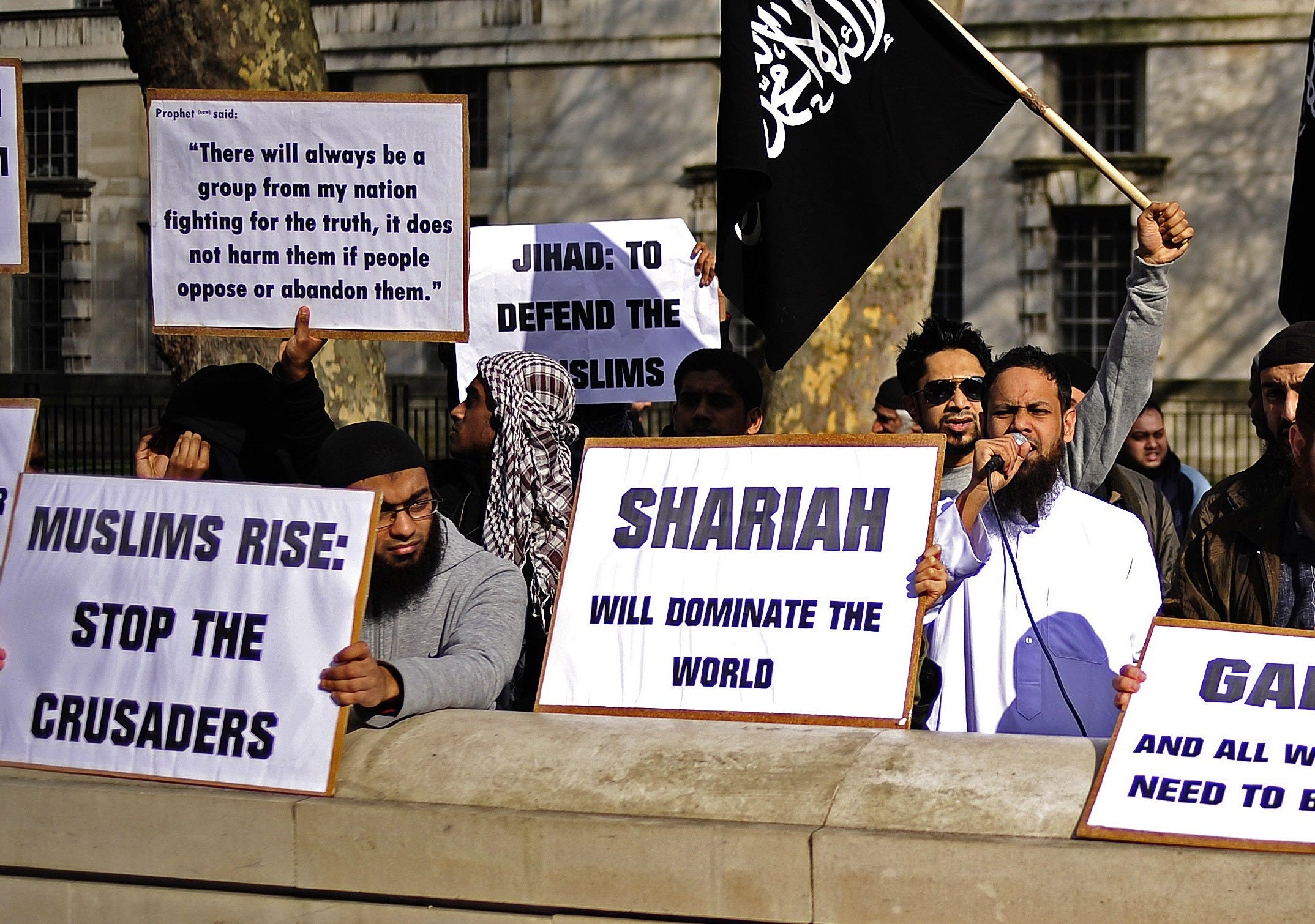
Denial is the culture warrior’s most reliable weapon. ‘Free speech is not under attack.’ ‘Nobody is being cancelled.’ ‘Puberty blockers are harmless and reversible.’ I could quote pages of such flat rejections of observable reality, but I want to focus on a specific example today: ‘There are no sharia courts in the UK.’
As with all such claims, it collapses under the slightest scrutiny. As we might expect, the denial is sustained through wordplay. Sharia courts are euphemistically known as ‘sharia councils’, but those in charge are fully aware of the truth. As the Islamic Sharia Council website openly admits, it was established ‘as an Islamic court to deal with matrimonial problems as well as jurisprudential issues’. Likewise, the website of Birmingham Central Mosque explicitly refers to its council as a ‘Shariah court’.
This hasn’t stopped former Apprentice contestant Bushra Shaikh berating Olympic athlete Sharron Davies as follows:
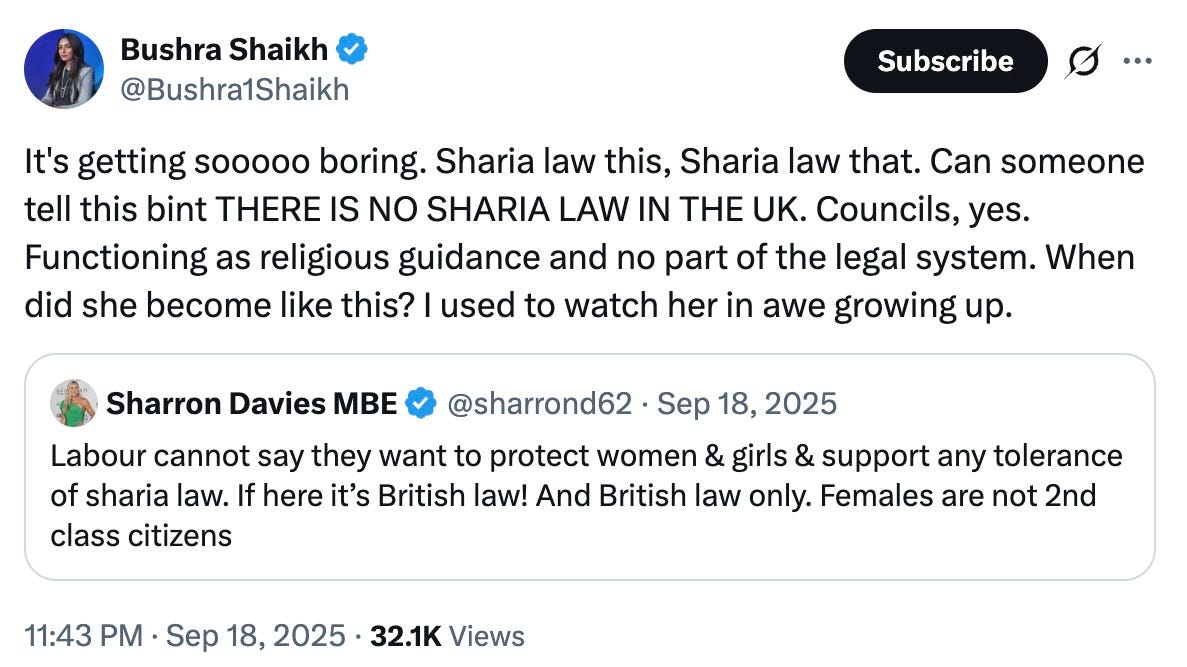
If Shaikh genuinely believes there are no sharia courts in the UK, she had better tell the sharia courts. They don’t seem to agree.
Whatever you wish to call them, there are an estimated eighty-five sharia courts currently operating in the UK. Although they hold no legal authority under UK law, they still qualify as courts according to their own standards. The term ‘sharia’ (or ‘shariah’) is Arabic for ‘the path’ or ‘the way’, a metaphor for the revealed law of Allah as outlined primarily in the Quran and the Sunnah. The courts are presided over by self-declared ‘judges’, and in many Muslim communities their decisions are deemed to be binding. What is this if not a court?
While sharia courts do not rule on criminal cases, they do settle matters in marriage and divorce, as well as other issues of Islamic jurisprudence (e.g., halal compliance, business transactions, inheritance disputes). There is ample evidence that those presiding over these courts yearn for an extended remit. As the human rights activist Maryam Namazie has pointed out, ‘sharia judges have made statements supporting the criminalising of blasphemy and apostasy and justifying the killing of apostates’. She goes on to note that ‘challenging any aspect of Sharia court decisions may lead to threats and charges of blasphemy and apostasy in Britain and abroad’.
Whether these are courts in a formal or informal sense, they still operate as a de facto parallel system of law. Recourse to the courts may technically be voluntary, but there exists clear pressure within Muslim communities – especially for women – to defer to their rulings. According to some councils, men are able to secure a divorce by simply uttering the word ‘divorce’ three times. This should tell us all we need to know about where the power lies.
According to Diana Nammi, founder of the Iranian & Kurdish Women’s Rights Organisation, in these courts women have ‘half the worth of men… In some cases, imams forced women to withdraw their court orders and go back to their husbands. They are mediating but they don’t consider violence as a reason for divorce. Some don’t think rape happens within marriage: it’s a woman’s duty to be ready any time’. Moreover, an app for Muslim men (approved by UK sharia courts) includes the option to select one to four wives and accords daughters half the inheritance value of sums received by sons. The existence of sharia courts effectively relegates women to second-class citizens.
How did we find ourselves in a situation where certain members of the public are forced to comply with a court that has no official legal standing?
— To continue reading this article, please consider becoming a paid subscriber —
