

How is it that we have reached the year 2026 and yet a referendum that took place a decade ago still obsesses us? Brexit represented a turning point in our national psyche, making the soil of Great Britain fertile for the full insanity of the culture war. While there were sound arguments on both sides of the debate, it became dominated by a narrative of intense tribalism, a Manichean struggle between Good and Evil. The fallout lingers, and even today retains the capacity to throttle critical thought.
The European Union’s stance on free speech is a case in point. One thing that has become increasingly apparent over the past decade is that the EU is profoundly hostile to this fundamental democratic principle. Diehard europhiles flatly reject this obvious truth, still swimming in the tides of the political sea change brought about in 2016. But surely by now it should be possible to move beyond misplaced sectarian loyalty and examine the evidence with a cool head.
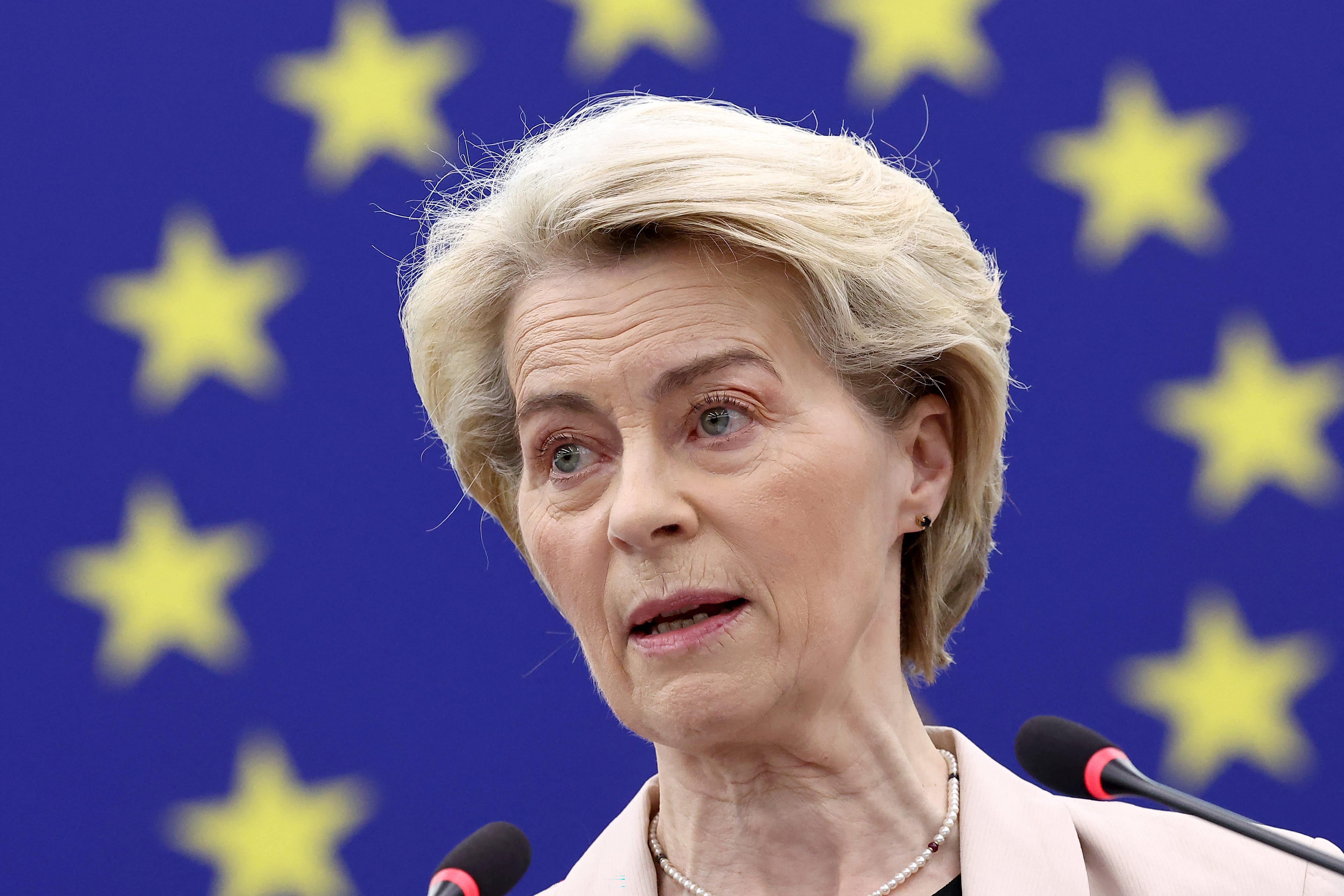
Just last week, Ursula von der Leyen, the President of the European Commission, blithely denied the reality of her own institution’s record on free speech. She was reacting to the travel restrictions imposed by the US on five ‘anti-disinformation’ (or pro-censorship) activists, including the former European Commissioner for the Internal Market, Thierry Breton. ‘Freedom of speech is the foundation of our strong and vibrant European democracy’, she posted on X. ‘We are proud of it. We will protect it. Because the EU Commission is the guardian of our values’.
This is about as Orwellian as it gets. To claim that the EU is some kind of standard-bearer for liberty is laughable in the extreme. And there is something especially chilling in the notion that the EU Commission could possibly be seen as a ‘guardian of our values’. It is an unelected body that wields a sinister degree of power, controlling not just how laws are written but whether they can be proposed at all. Elected representatives in the European Parliament may approve or reject new laws, but they are denied the basic democratic function of setting the legislative agenda. That power lies with von der Leyen and her unaccountable cronies.
Like all authoritarian bodies, the EU manipulates language in order to avoid stating its purposes directly. You will not find the word ‘censorship’ in its official policies, even though this is precisely what its leaders endorse. Instead, a range of euphemisms are deployed, such as ‘content moderation’, ‘risk mitigation’, ‘harm reduction’, ‘counter-disinformation measures’ and, perhaps most disturbing of all, ‘pre-bunking’. Here is von der Leyen at the Copenhagen Democracy Summit May 2024, calling for censorship and comparing free speech to a virus in need of inoculation.
This is just one of innumerable examples of the EU endorsing censorship while claiming to do the opposite…
— To continue reading this article, please consider becoming a paid subscriber —
