
The excuses made for the Filton 4
Criminal damage and sledgehammer attacks are not legitimate forms of protest. It is remarkable that this needs to be said.

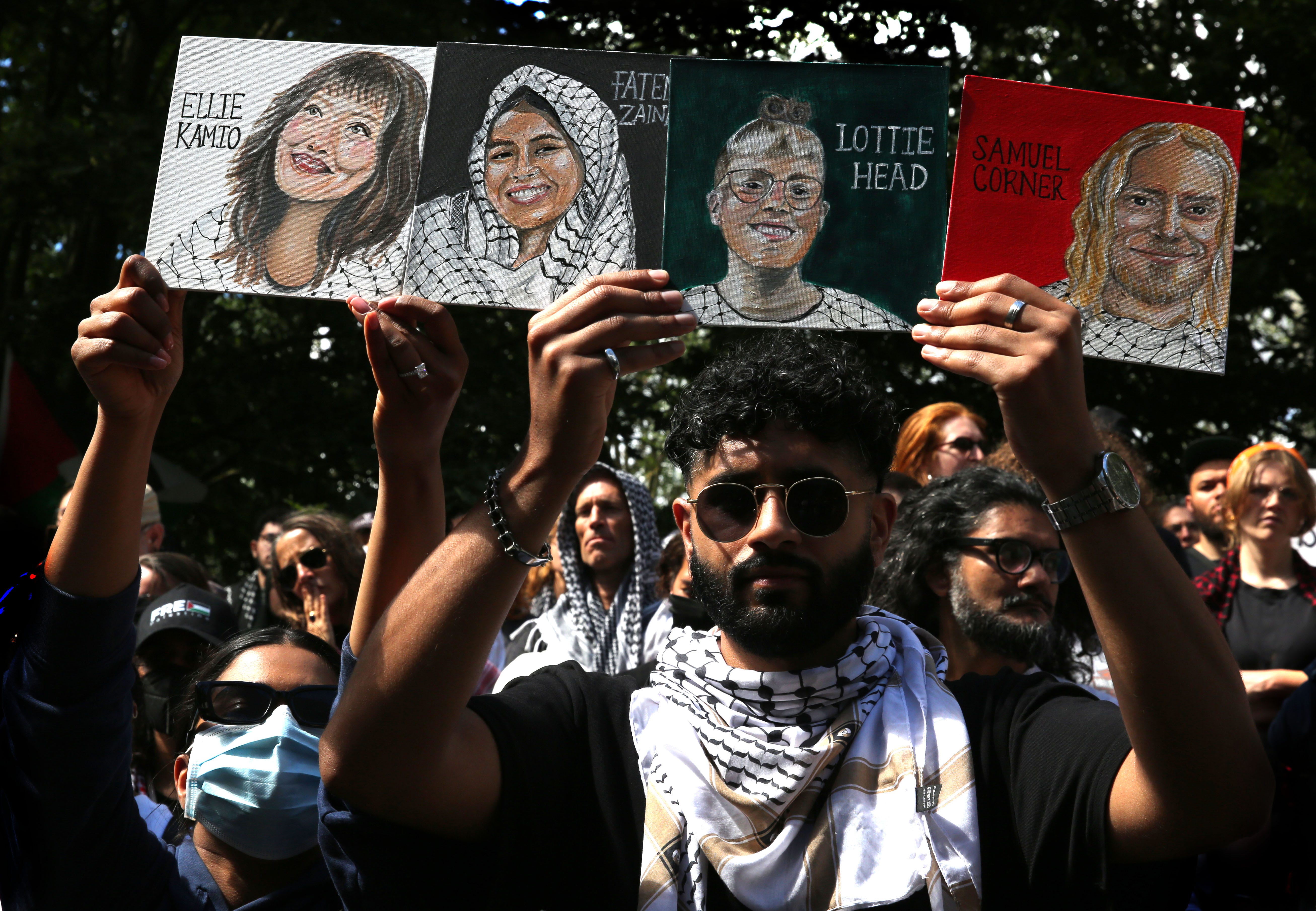
The contortions of activists and commentators over the conviction of the ‘Filton 4’ are something to behold. Amnesty International – a charity that once campaigned for prisoners of conscience but now produces screeds against those upholding the rights of women and homosexuals – has claimed that the sentencing represents ‘another step in the ongoing crackdown’ on the freedom to protest. Green Party leader Zack Polanski has lamented the sentences as ‘gut wrenching’ and a ‘truly dangerous attack on the right to protest’.
From reading such accounts, one would have thought that these activists had simply chanted slogans with placards held aloft. The reality is that they crashed through the perimeter of the Elbit Systems facility in Filton, destroyed equipment worth £1.2 million and, in the course of the attack, one of their number fractured a police officer’s spine with a sledgehammer. Polanski may not understand this basic democratic principle, but the right to protest does not include criminal damage and causing grievous bodily harm. If it does extend to acts of this kind, would Polanski support his detractors’ right to protest by striking him with hammers?
That sounds like a dark joke, but leftists on social media have been desperately attempting to justify the violence against the officer on the grounds that the fracture of the lumbar spine was not too serious and she was able to return to work after three months. Here is a typical example:
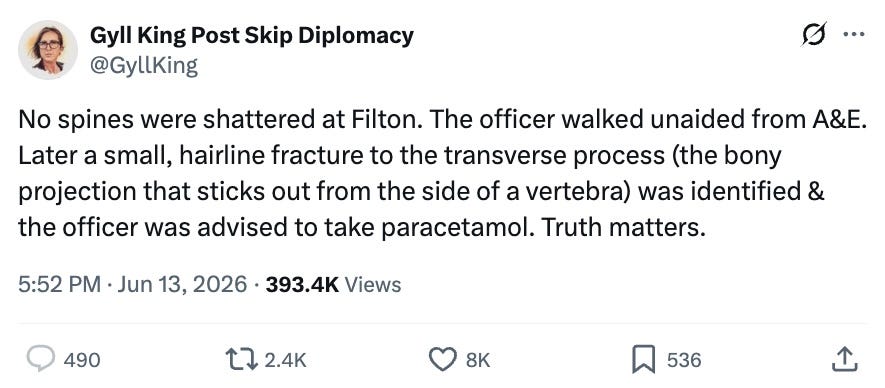
Such arguments are, of course, asinine and self-discrediting. Nobody seriously believes that armed assault ought to be legal so long as the resulting injury is minor, not even the ideologues currently making that claim. The sad truth is that there are an increasing number of people who now believe that violence is justified if it is in the service of their particular cause.
For the record, it is worth reminding ourselves of what the officer, Sgt Kate Evans, actually experienced. She described in court the ‘severe pain’ after the initial blow, her fear that she had been paralysed, the fact that she was - as reported in the Telegraph - ‘left unable to sit for months and had to sleep on the floor’. Yet even if there had been no injury whatsoever, that would not make the assault morally or legally justifiable, and it seems incredible that such a statement of the obvious needs to be made at all. But this is 2026, when ideology takes priority over basic human decency.
The fallout from the ‘Filton 4’ has revealed how profoundly political tribalism has skewed perceptions, to the point that reality must be jettisoned whenever it contradicts the narrative. The most misleading claim about the trial is that the accused were sentenced as terrorists even though no jury had convicted them of terrorist charges. Lawyers Calum McNicholas and Dennis Kavanagh have each provided valuable explanations as to why this is not the case, which you can read here and here.
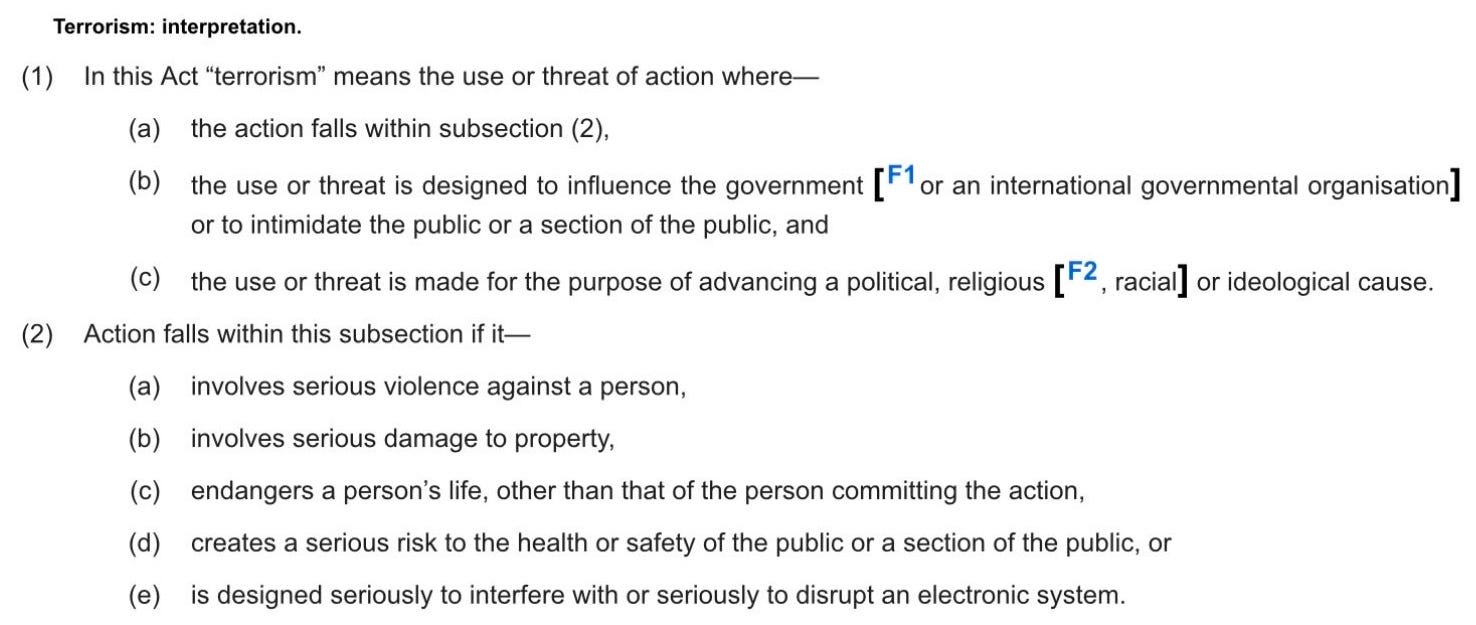
The key points are these. Having found the four guilty of the charges, the judge’s duty was to pass sentence. He was required to consider aggravating factors which, according to the Sentencing Act 2020, includes whether the offence has a ‘terrorist connection’. By their own admission, the Filton 4 had targeted the Elbit Systems facility because the firm is one of Israel’s largest defence contractors. There can be no question that these stated motivations, combined with the damage and violence involved, satisfied the statutory criteria for a terrorist connection (see below).
As a result, the judge was obliged to uplift the sentences. This is why Charlotte Head and Leona Kamio were sentenced to six years for criminal damage, Fatema Rajwani for four years and eight months for criminal damage, and Samuel Corner to seven years and eight months for criminal damage and grievous bodily harm (GBH) without intent.
Corner and his accomplices had engaged in criminal acts in an effort to intimidate people into accepting their desired political outcomes. For most people, this certainly accords with the standard definition of ‘terrorism’ or, to be generous, a ‘terrorist connection’. Critics have claimed that this sets a ‘dangerous precedent’, but these are standard sentencing procedures and the judge followed them to the letter. If campaigners wish to see the law changed so that political violence is no longer deemed terroristic, then they should agitate for that. It is unlikely they will get very far.
In one of the more bizarre exchanges I had on X, a man called George Rosenberg, who claims to be a lawyer, argued that GBH without intent meant that the incident with the sledgehammer was ‘an accident’. This reflects a common misunderstanding of the offence. Samuel Corner was acquitted of GBH with intent because the jury was not satisfied beyond reasonable doubt that he specifically intended to cause serious injury. That in no way suggests that the blows were accidental. If the jury had concluded it was an accident, they would not have convicted him of GBH at all. The judge could not have been clearer: Corner, he said, used ‘extreme and gratuitous force against a vulnerable police officer who was acting in the course of her duties’.
Anyone is entitled to argue that these laws and sentencing procedures are unjust, although they might want to reflect on what might happen in a society where political violence is treated with leniency. In the meantime, perhaps they could start by being honest about what actually took place at Filton, stop making excuses for violent acts, and remind themselves of the importance of peaceful protest.
If Lucy Connolly can get three years for a tweet,(and there are plenty of other examples of two tier justice), I’d say these sentences are far too short.
What is really exasperating is knowing that had the attack been by 'right wing' protestors, the exact same idiots would be complaining that it signified the return of fascism and the sentences were totally inadequate. They seem unable to see or hear themselves. The blind fanaticism is frightening.