

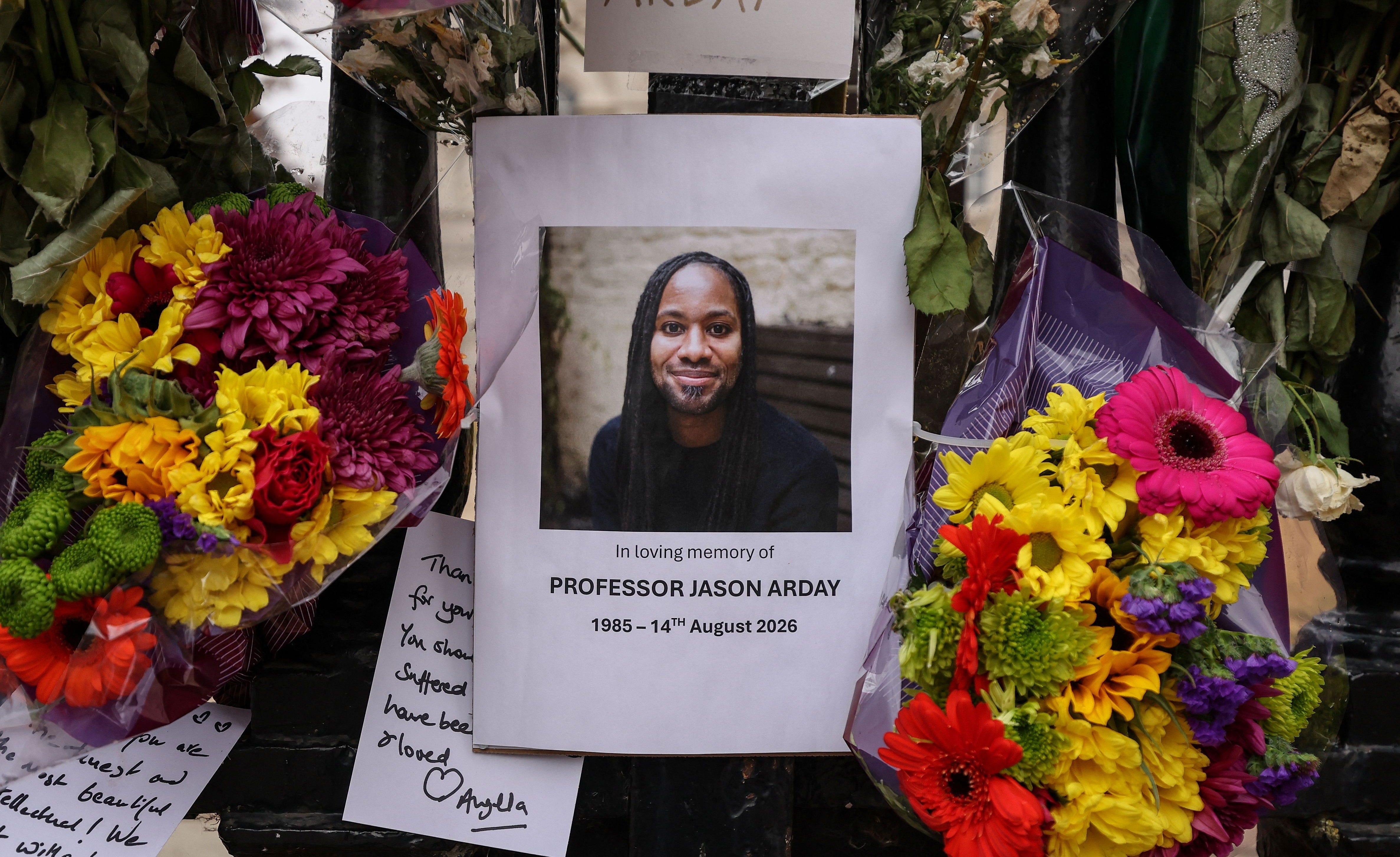
The Committee for Academic Freedom has announced an independent investigation into how it was that Jason Arday was hired as a professor at Cambridge University. This may seem an odd undertaking, given that Cambridge itself had already promised a full inquiry. Unfortunately, the university has since backtracked, now focusing primarily on whether there was a lack of support for Arday once the media coverage became so intense. This has left the task of establishing how Arday came to be appointed in the first place to outsiders.
It was inevitable that Cambridge would renege on its original plans. To investigate these circumstances properly would involve rigorous scrutiny of the rot that has developed within academia itself. By contrast, as an independent body, the Committee for Academic Freedom can afford to be refreshingly direct in setting out its objectives. It intends to examine:
(a) the circumstances in which Arday was appointed;
(b) whether the appointment, and the assessment of the academic record relevant to it, were consistent with the standards of academic excellence, merit, academic integrity, due diligence and procedural fairness properly to be expected in an appointment to a professorship at the University;
(c) the role, if any, played in the appointment by considerations relating to equality, diversity or representation, including whether any positive action in recruitment was taken and, if so, whether it was consistent with section 159 of the Equality Act 2010; and
(d) how the University considered and responded to concerns raised, whether within or outside the University.
This is a vital investigation. The activist capture of universities has led to a situation in which the production of knowledge and the pursuit of truth are considered subservient to the promotion of an ideological creed. Jason Arday was the highest-profile victim of this generalised lowering of standards for the benefit of the activist class, but there have been many others.
One may as well be blunt. Cambridge cannot credibly investigate the institutional culture that produced this failure, because it has itself been instrumental in creating it. Like most universities, Cambridge has invested so much in DEI – a toxic and demeaning orthodoxy that reduces human beings to mere representatives of particular group identities – that there is no conceivable scenario in which the university would admit that DEI is itself a major part of the problem.
Debates have raged about Arday’s own conduct, but I consider him to be a victim of a corrupt system. His family deserves answers, and it will probably fall to the Committee for Academic Freedom to provide them. While I understand the accusations that he exploited the good nature of others to advance his own career, I also contend that such behaviour was enabled by those who should have known better. I do not say all this solely out of respect for the dead, but rather from a conviction that we should be hesitant before judging strangers on the basis of incomplete knowledge. Moreover, I believe it is necessary to examine whether the pressures created by promoting him far beyond his abilities contributed to the circumstances that ended so disastrously.
I have known plenty of fabulists in my life, the sort of people who embellish their achievements or invent stories out of vanity or a harmless desire to seem more interesting than they actually are. Usually the consequences are trivial. The man who tells preposterous stories in the pub is indulged by his friends, who soon learn not to take his words too seriously. The problem begins when institutions which are supposed to exercise judgement stop doing so and instead take extravagant stories at face value, conferring prestige on the fabulist rather than subjecting his claims to scrutiny.
In addition, for many decades now, ideological moralising – typically around issues of group identity – has passed for scholarship. Even back in my undergraduate days, it became clear to many of us that our essays would be especially well received if they amounted to a form of moral detective work: teasing out the prejudices of the author instead of analysing his work. It’s far easier to write about why Shakespeare and Dickens were racist, homophobic and sexist than to engage constructively with minds much more talented than our own. And it’s certainly more appealing when such crab-in-the-bucket thinking is rewarded with higher marks.
Arday’s death was a tragedy. That does not alter the obligation to be truthful about his academic record. His 2015 doctoral thesis at Liverpool John Moores University was ostensibly an exploration of peer-monitoring among student teachers. As many readers will already know, extensive similarities have been identified between passages in the thesis and a doctorate submitted at Brunel University six years earlier.
Liverpool John Moores investigated allegations of plagiarism but did not uphold them, attributing the similarities to ‘honest and reasonable error’. Arday denied deliberate plagiarism or dishonesty, saying that his autism meant that his way of learning relied heavily on ‘mimicry’. This would not, of course, excuse the verbatim lifting from unattributed sources. Moreover, questions have been raised about whether Arday was autistic at all.
We need not pore over the various claims that Arday made, academic and otherwise, that have turned out to be false. The real question is why such a low standard of scholarship was rewarded with a meteoric rise in the profession. (Richard Dawkins has described Arday’s doctoral thesis as ‘illiterate’, failing ‘to meet expected standards for PhD, let alone a Cambridge professorship’.) This is why the investigation is not really about Arday at all, but about how the universities reached the point at which activism could be mistaken for academic achievement.
To understand how that could happen, we need to go much further back…
— To continue reading this article, please consider becoming a paid subscriber —
