

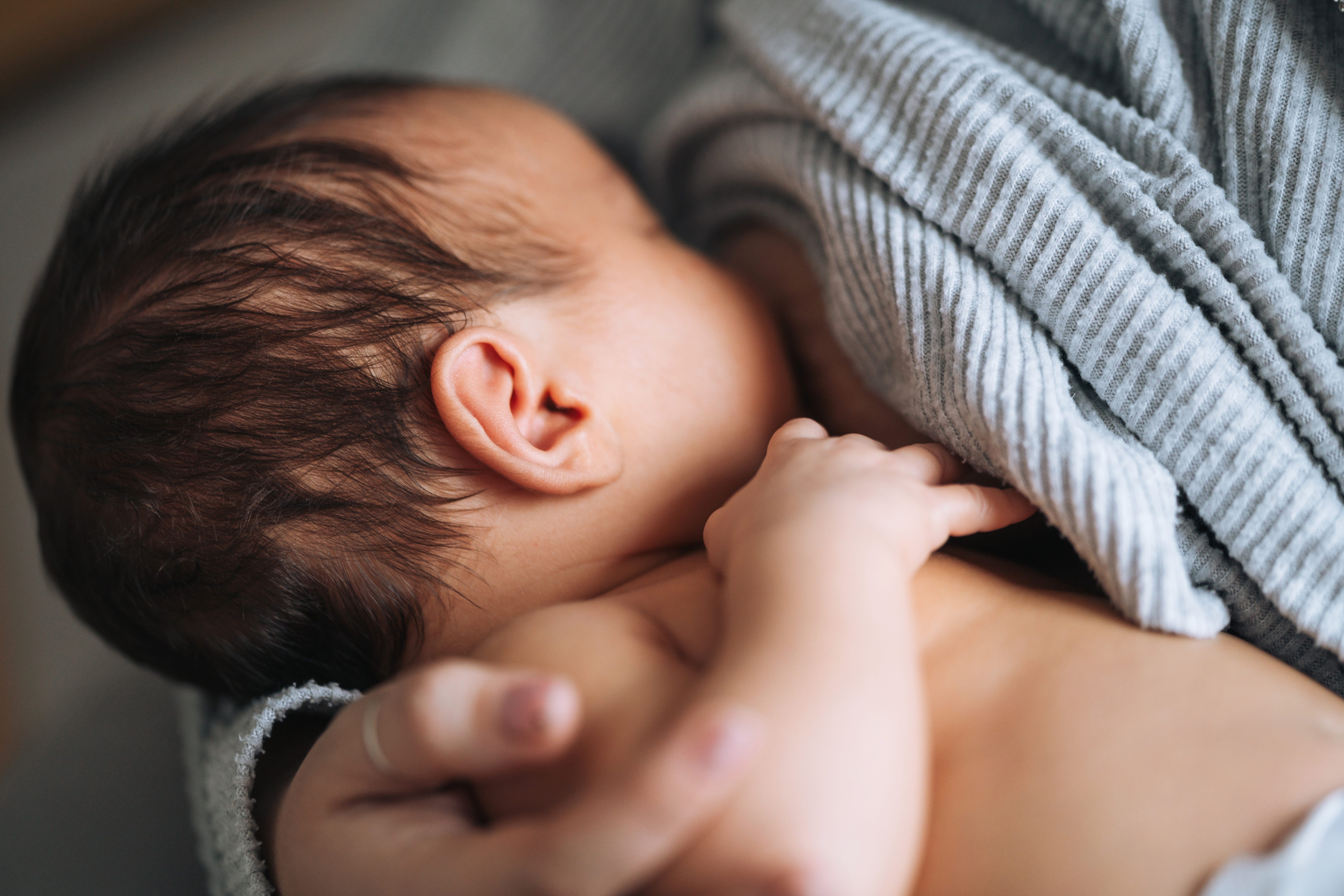
There are many good reasons why men should not breastfeed. First and foremost, it’s because they’re men. There are other reasons too, but let’s just say that this one takes priority.
This weekend, the Association of Lactation Consultants in Ireland (ALCI) paused ticket sales for its annual conference. This decision followed complaints about one of the scheduled speakers, Jacob Engelsman, who was due to give a talk on ‘lactation support for gender-diverse families’. This title is marginally more palatable than his previous talks on ‘inducing lactation for kinksters’ at fetish conventions, but only just. It has since been reported that the venue – the Ardilaun Hotel in Galway – will no longer host the conference, although the ALCI has not yet confirmed whether it will be abandoned altogether.
The concept of ‘male breastfeeding’ is not only sinister on a conceptual level; it also raises serious and unresolved safety questions. In order for lactation to be induced in males, treatment has commonly involved oestrogen and progesterone to develop the breast tissue, together with breast pumping and sometimes domperidone (a drug that raises prolactin and can stimulate milk production). The official product information for domperidone – sold under the brand name Motilium – warns that the drug passes into breast milk and that possible cardiac effects in the baby cannot be ruled out. Even if the risk is slight, why would anyone prioritise the feelings of a trans-identified male over the safety of a child?
Of all the insane demands of the genderist movement, the insistence that men ought to be able to breastfeed babies with a chemically induced mammary secretion must be among the most egregious. Frankly, I regard it as a form of child abuse. An adult male’s desire to breastfeed should not override the rights of the baby. I find it astonishing that I am even typing these words, but the behaviour of activists in recent years has meant that many of us have grown accustomed to stating the obvious.
There can be little doubt that male breastfeeding is scarcely on the radar of the general public; indeed, many people would probably be astonished to learn that it is happening at all. Yet only last month controversy erupted over an organisation called Queer Milk, then advertised as a weekly peer-support group welcoming ‘all LGBTQ+ people’. While the Scottish Government says Queer Milk itself receives no dedicated public money, the group is operated by LGBT Health and Wellbeing, a charity in receipt of substantial public funding.
Following criticism, Queer Milk insisted that it does not provide clinical advice or support induced lactation, and its chief executive went further, saying that the group is not open to trans women seeking to breastfeed and is not intended to encourage such activity. That clarification sits rather awkwardly with the breadth of its earlier publicity, and indeed with the name itself. Why, one is tempted to ask, should breast milk need to be ‘queered’ at all?
I don’t believe that it is particularly old-fashioned or reactionary to insist on a firm boundary between the feeding of babies and the sexual interests of adults…
— To continue reading this article, please consider becoming a paid subscriber —
