

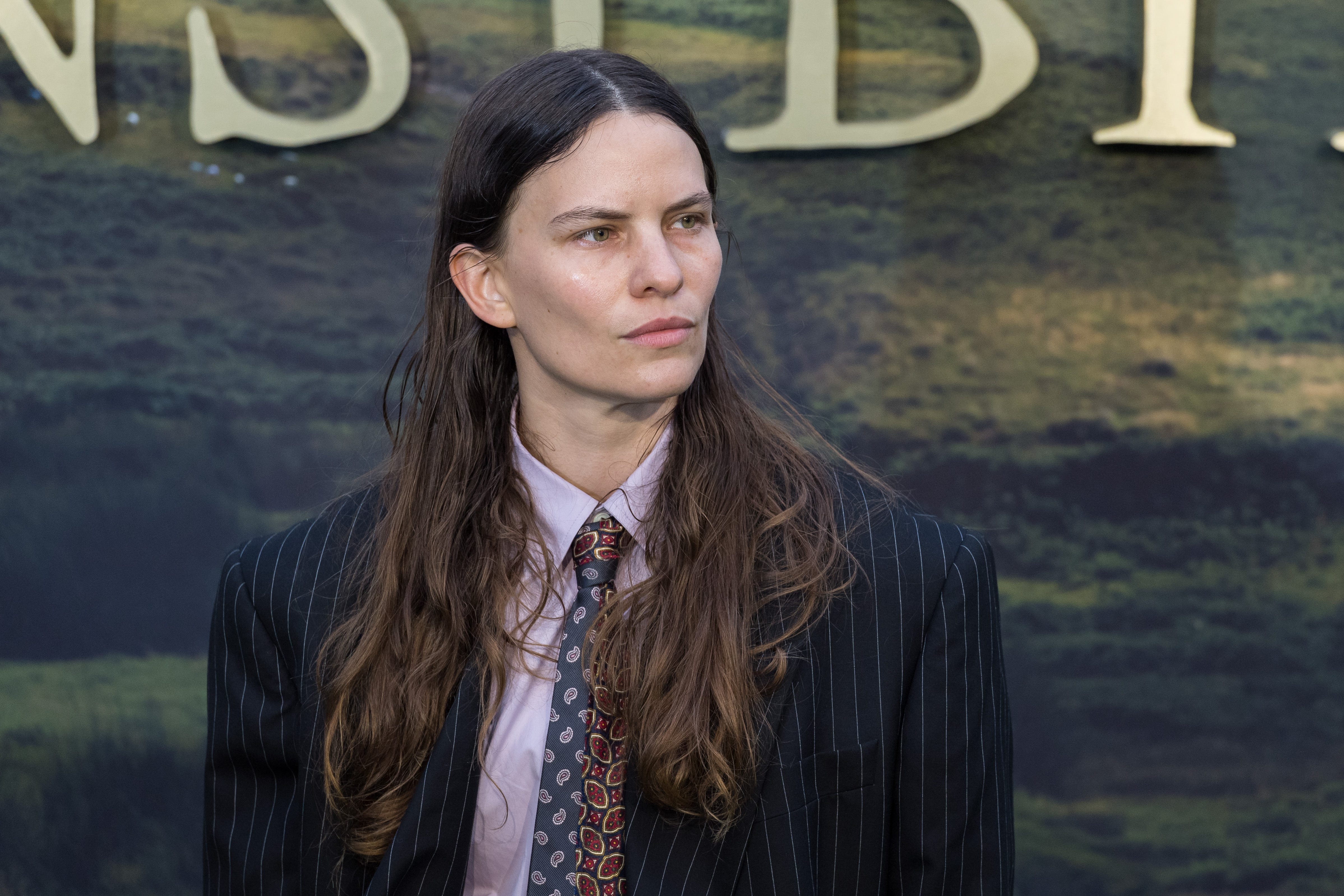
A new trend appears to be emerging in the world of film and television. Georgia Oakley’s movie adaptation of Jane Austen’s Sense and Sensibility is the latest example, in which one of the male characters, Mr Palmer, is played by a woman, Eliot Sumner. On screen, such casting decisions are typically comedic devices. One thinks immediately of Kathleen Turner as Chandler’s father in Friends. But here, the audience is expected to accept that Sumner is male because off-screen she happens to identify as non-binary.
We have grown accustomed to Hollywood and streaming services shoehorning ideology into entertainment. In the second series of Amazon’s The Rings of Power, a spin-off from The Lord of the Rings, an orc is portrayed sympathetically as a family man, anxious about the welfare of his wife and baby and reluctant to head off to war. After all, would it not be a form of racism to stigmatise all orcs as monsters? Bear in mind this is a race whose members slaughter humans, talk merrily about eating ‘man-flesh’ and occasionally dabble in cannibalism. They don’t even use cutlery.
The principle of verisimilitude in storytelling is far more important than many people realise. It obviously does not mean that fiction has to resemble reality, but it does mean that it must be coherent within the reality of the world that it creates. For example, we all accept that the warriors in Ang Lee’s film Crouching Tiger, Hidden Dragon can move in improbable ways, scaling trees and walls in manoeuvres that resemble levitation. But if Li Mu Bai suddenly transformed into a giant marshmallow and simply rolled on to his foes to subdue them, audiences would quite rightly consider the movie a failure. The power of near-flight is encoded into that world; marshmallow transmogrification is not.
So when a cross-dressing woman appears on screen, and every other character seems not to notice, it points to a specifically absurdist form of storytelling. Christopher Nolan’s The Odyssey made this fatal misstep in one of the opening sequences of the film, when an obviously female Elliot Page appears as the Greek warrior Sinon in full battle dress. In a film so relentlessly dour, the gambit feels both incongruous and self-satirising. It does not work.
As I say, comedy is a different beast. No audience member believes that Kathy Burke is actually a teenage boy in Kevin & Perry Go Large, but we accept that the character is male because the style of humour is so self-evidently preposterous. Now imagine Kathy Burke playing one of the schoolboys in Dead Poets Society and you’ll see the distinction.
There are rare cases where cross-sex casting has worked well. In Peter Weir’s The Year of Living Dangerously, Linda Hunt played Billy Kwan, a male Eurasian photographer, and won Best Supporting Actress at the Oscars. It worked because Kwan’s strangeness was an essential aspect of the character. He was a dwarf, facially enigmatic, almost otherworldly. Hunt’s appearance and voice added to the sense that Kwan was an outsider rather than becoming an obstacle to our belief in the character.
The case of Eliot Sumner is not comparable. In Sense and Sensibility she is playing Mr Palmer, a traditional English gentleman. Sumner is unmistakably female, and so the audience is being asked to overlook a visible contradiction. Austen’s story is being played naturalistically, and so it makes no sense that not one character remarks upon the fact that Mr Palmer is quite clearly not a man. A female transvestite at the turn of the nineteenth century would have been socially provocative, not something that those around her would fail to perceive.
Similar arguments about verisimilitude arise with colour-blind casting in historical drama…
— To continue reading this article, please consider becoming a paid subscriber —
