

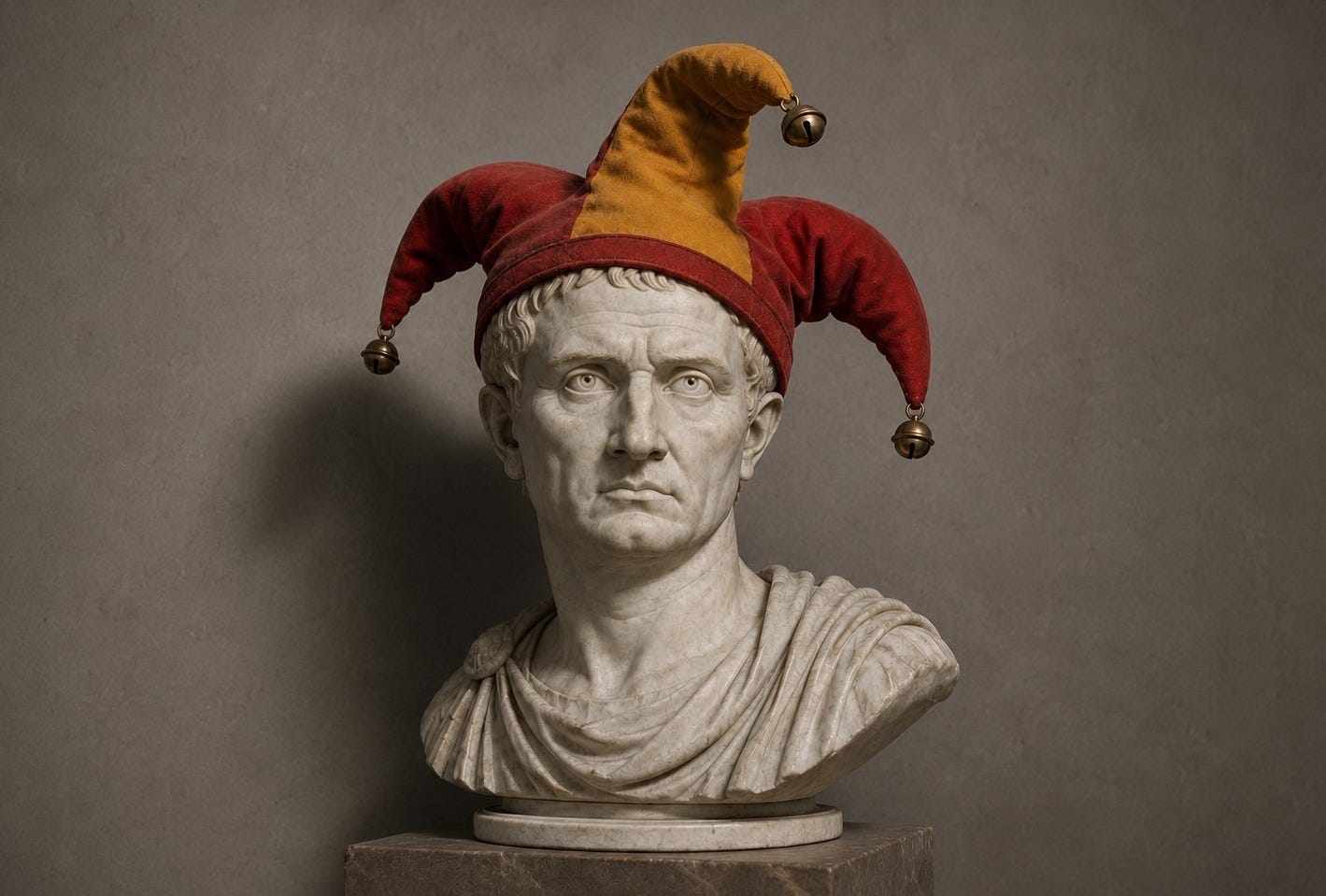
One of the defining characteristics of a tyrant is his or her unwillingness to be mocked. When the poet Osip Mandelstam poked fun at Stalin’s ‘cockroach whiskers’ and his fingers ‘fatty like worms’ he was exiled and eventually sentenced to five years in a corrective labour camp. Within a year of his imprisonment, he had died of malnutrition and was buried in an unmarked grave.
One might have expected that, given its history, Germany would be especially wary of laws that ringfence politicians from ridicule. Yet in 2021, its government expanded Section 188 of the Criminal Code – aimed at protecting politicians from defamation – so that even crude insults could result in prosecution. This draconian law is why the Free Speech Union is now hoping to launch a branch in Germany.
As with all ‘hate speech’ laws, Section 188 is wide open to exploitation by any politician seeking to suppress dissent. In November 2024, Bavarian police raided the house of retired soldier Stefan Niehoff for a social media post in which he had referred to Robert Habeck, then Germany’s vice-chancellor, as a ‘Schwachkopf’ (dummy). That mild insult was all it took to see his liberties violated by the state.
Such legislation is the equivalent of the lèse-majesté laws that still exist in certain parts of the world, designed to punish subjects who denigrate the king. Countries that retain these laws include Thailand, Cambodia, Jordan, Morocco, Brunei, Saudi Arabia and Bhutan. The maximum penalty for insulting the king in Jordan is eerily identical to that prescribed by Section 188 in Germany: a prison sentence of three years.
In Turkey, citizens face similar oppression. Since becoming president in 2014, Recep Tayyip Erdoğan has relied on Article 299 of Turkey’s Penal Code – a previously little-used offence criminalising insults to the president – to investigate and prosecute tens of thousands of his critics. Former beauty queen Merve Büyüksaraç was convicted and received a suspended sentence for reposting on Instagram a satirical poem about the president that she had found funny.
The case of German comic Jan Böhmermann is similarly revealing. In 2016, he had produced a music video which ridiculed Erdoğan. In response, the Turkish government summoned the German ambassador in Ankara to demand that the video be deleted from the internet. Böhmermann in turn responded with a poem that upped the offensiveness tenfold, including references to Erdoğan having sex with goats and sheep. Turkey then requested that Böhmermann be prosecuted under Section 103 of the German Criminal Code, which protected foreign heads of state from insults.
That law was repealed in 2018, but Section 188 remains on the German statute books in its expanded form and is arguably even more authoritarian. A little knowledge of the history of tyranny would not go amiss, and in particular how this kind of legislation has typically been so vaguely worded. Section 188 contains open-ended concepts such as whether a statement is ‘capable of significantly hindering’ a politician’s public work. In the UK, Section 127 of the Communications Act criminalises ‘grossly offensive’ speech, a categorisation that it makes no effort to define.
Such vagueness is not accidental. It enables the authorities to interpret the law expansively, applying it to whatever speech or behaviour they choose to regard as criminal…
— To continue reading this article, please consider becoming a paid subscriber —
